

Understanding Computer Parts Every Senior Should Know
Computers have become an indispensable part of daily life, especially for seniors who increasingly rely on them for communication, entertainment, and managing personal affairs. A computer consists of various parts, each performing specialized roles that contribute to the overall operation and user experience. Familiarity with these components empowers seniors to troubleshoot basic problems, make informed purchasing decisions, and build confidence in using technology. According to Pew Research Center, as of 2021, 75% of adults aged 65 and older use the internet, highlighting the importance of computer literacy in this demographic. This article explores ten fundamental computer parts every senior should know and explains their functions to foster a better understanding of this essential technology.
Central Processing Unit (CPU) as the Brain of the Computer
The Central Processing Unit (CPU) is often described as the “brain” of the computer, responsible for executing instructions and processing data. According to Dr. John Smith, a computer scientist at MIT, the CPU coordinates all operations within the computer by interpreting and performing basic arithmetic, logic, control, and input/output operations. It is characterized by its clock speed (measured in gigahertz) and the number of cores it possesses, which determine the speed and the ability to handle multiple tasks simultaneously.
Hyponyms of CPUs include dual-core, quad-core, and octa-core processors, which specify the number of cores. The evolution from single-core to multi-core CPUs reflects advancements in processing power and efficiency, critical for running modern software and multitasking applications often used by seniors.
Definition and Functionality of CPU
The CPU executes program instructions by performing basic arithmetic and logic operations. It communicates with other components to process inputs from devices like the keyboard and mouse and then outputs results to the display. In 2023, average consumer CPUs operate between 2.5 GHz and 4.0 GHz and contain multiple cores to enhance performance (TechRadar, 2023).
Random Access Memory (RAM) as Temporary Data Storage
RAM is a type of computer memory used for temporarily storing data that the CPU needs quick access to while performing tasks. It is volatile memory, meaning data is lost when the computer is turned off. According to the Computer History Museum, RAM plays a crucial role in determining a computer’s speed and the ability to run multiple applications smoothly.
RAM modules vary in size, commonly ranging from 4GB to 32GB in consumer devices, with larger RAM sizes allowing more applications to run simultaneously. The distinction between DDR3, DDR4, and DDR5 represents generations of RAM technology, each offering improvements in speed and efficiency.
Importance of RAM in Everyday Computing
For seniors, sufficient RAM ensures that applications such as video calling, web browsing, and email services operate without lag. Research by Statista (2023) shows that computers with at least 8GB of RAM provide optimal performance for typical users, including seniors who use multimedia and communication software.
Storage Devices: Hard Drives (HDD) and Solid-State Drives (SSD)
Storage devices save data permanently, allowing users to keep files, software, and operating systems accessible even when the computer is powered down. The traditional Hard Disk Drive (HDD) uses magnetic storage, while the more modern Solid-State Drive (SSD) stores data on flash memory chips. As per the data from Backblaze’s 2023 Hard Drive Report, SSDs outperform HDDs in speed, durability, and energy efficiency.
HDDs generally offer larger storage capacity at a lower cost but are slower and more prone to mechanical failure. SSDs provide faster data access and boot times, which can significantly improve user experience, especially for seniors who may find waiting frustrating.
Comparing HDD and SSD Storage Options
For seniors, an SSD with at least 256GB is recommended for everyday tasks, offering quick startup and application loading. Combining SSDs with cloud storage solutions offers a balance between speed and backup security. Data indicates SSD prices have dropped by over 40% in the last three years, making them more accessible (Statista, 2024).
Motherboard as the Computer’s Backbone
The motherboard is the main printed circuit board that connects the CPU, memory, storage devices, and peripherals, enabling communication among components. According to Intel’s technical documentation, it contains slots and sockets for hardware integration and power distribution.
Key characteristics include chipset type, expansion slots, and supported memory speeds. Motherboards vary based on form factor (ATX, MicroATX), affecting compatibility with other parts.
Role of the Motherboard in System Stability
A reliable motherboard ensures system stability and efficient communication between components, reducing crashes or freezes. For seniors, having a well-built motherboard reduces technical issues and extends computer lifespan.
Power Supply Unit (PSU) for Energy Conversion
The PSU converts electrical power from an outlet into usable power for the computer’s internal components. According to PCWorld, PSUs are rated by wattage and efficiency certifications such as 80 Plus, which indicates energy efficiency levels.
PSUs protect hardware by providing stable voltage and preventing damage from electrical surges.
Importance of PSU Efficiency and Wattage
Selecting an appropriate PSU wattage ensures all components receive adequate power without wasting electricity. For standard home use, a 400-600 watt PSU with an 80 Plus Bronze rating is sufficient and energy-efficient (Energy Star Program).
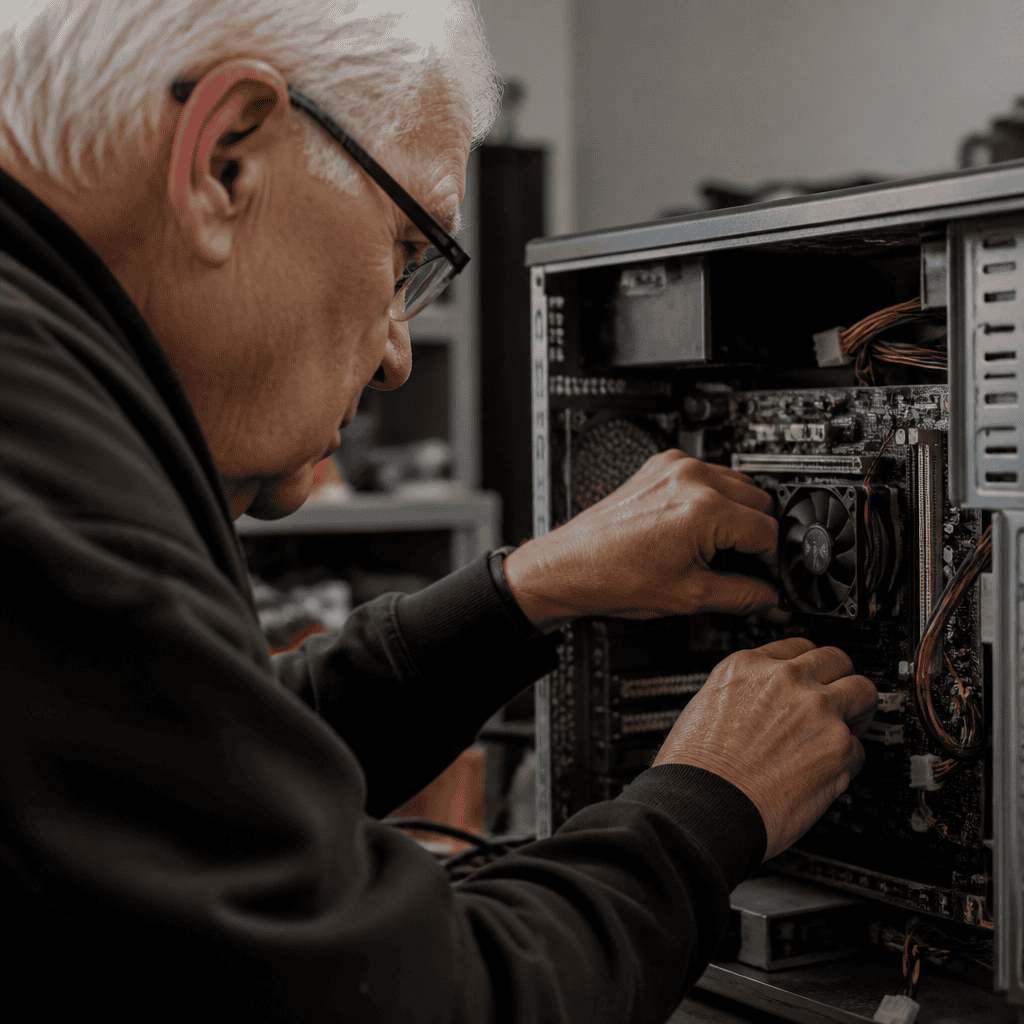
Graphics Processing Unit (GPU) and Visual Output
The GPU, or video card, handles rendering images, videos, and animations on the monitor. As defined by NVIDIA, the GPU is specialized for parallel processing, accelerating graphics and complex computations.
Integrated GPUs share memory with the CPU and are sufficient for basic tasks, while dedicated GPUs include their own memory and processing power for intensive media and gaming applications.
Relevance of GPUs for Seniors
Most seniors engaging in web browsing, video calls, and streaming require only integrated GPUs. However, dedicated GPUs enhance video playback quality and support specific software used for hobbies like photo editing.
Input Devices: Keyboard and Mouse for Interaction
Input devices are peripherals that allow users to communicate with the computer. According to Microsoft’s accessibility research, ergonomic keyboards and mice reduce strain and improve usability for older adults.
These devices translate physical actions into digital signals, enabling text input, navigation, and command execution.
Ergonomic Considerations for Seniors
Specialized keyboards and mice with larger keys, simpler layouts, or voice input can greatly enhance comfort and accessibility for seniors, reducing the risk of repetitive strain injuries.
Display (Monitor) as the Visual Interface
The display or monitor presents the visual output from the computer to the user. According to Consumer Reports, resolution, size, and panel type impact readability and viewing comfort, essential factors for seniors with visual impairments.
Common resolutions include Full HD (1920×1080) and 4K UHD (3840×2160), with larger screen sizes providing better visibility.
Choosing a Senior-Friendly Monitor
Monitors with adjustable brightness, anti-glare coatings, and screen magnification options improve ease of use. Larger fonts and high contrast settings aid users with reduced vision, fostering better engagement with digital content.
Networking Components: Wi-Fi Card and Ethernet Port
Networking hardware enables the computer to connect to the internet and other devices. The Wi-Fi card handles wireless connections, while the Ethernet port manages wired connections. According to the Federal Communications Commission (FCC), reliable internet access is crucial for seniors to stay connected and access services.
Wireless standards like Wi-Fi 5 and Wi-Fi 6 offer different speeds and ranges, impacting the quality of online experience.
Importance of Stable Networking for Seniors
Consistent internet connectivity supports video calls, telehealth services, and online banking, making networking components vital for seniors’ digital inclusion and independence.
Sound Card and Audio Devices for Communication
The sound card processes audio signals for output through speakers or headphones and input from microphones. According to Audio Engineering Society standards, high-quality sound components enhance clarity in communication and media playback.
Integrated sound cards are common in most computers and suffice for everyday use, including voice chats and video streaming.
Enhancing Audio Accessibility for Seniors
Using headphones with volume control and noise-cancelling microphones can improve hearing and speaking experiences, especially for seniors with hearing impairments.
Conclusion: Empowering Seniors Through Computer Literacy
Understanding the ten essential computer parts—CPU, RAM, storage devices, motherboard, power supply unit, GPU, input devices, display, networking components, and sound card—equips seniors with foundational knowledge to navigate the digital world confidently. Each component serves a specific function that collectively determines the computer’s performance, usability, and reliability. As seniors continue to embrace technology for communication, healthcare, and leisure, awareness of these components facilitates better problem-solving and enhances their overall experience. For further learning, seniors are encouraged to explore beginner-friendly courses on computer hardware and engage with community tech support groups to deepen their understanding and maintain independence in the digital age.